
By Julianna Evans
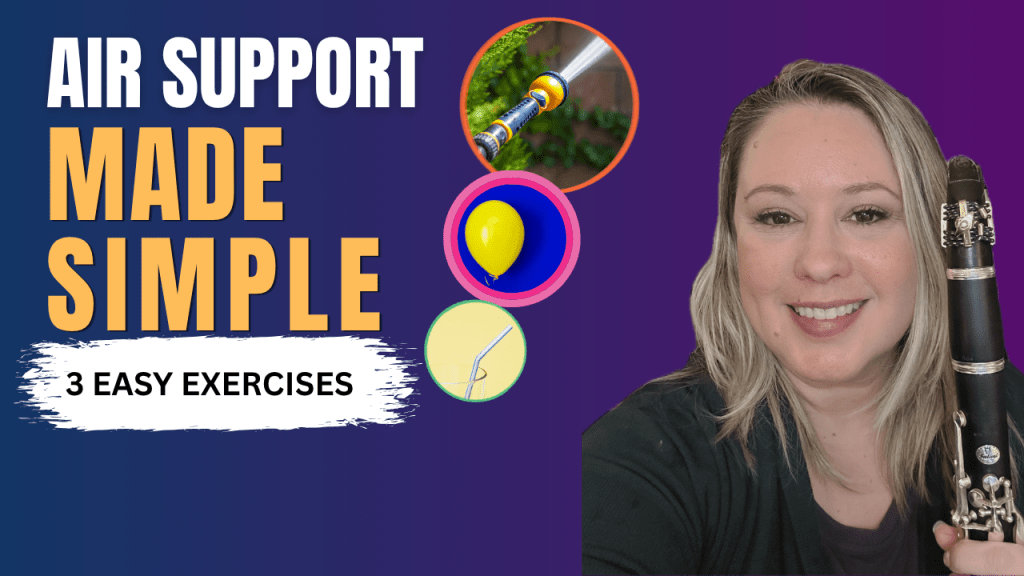
5 Simple Exercises for a Bigger, Better Clarinet Sound
Have you ever been told, “Use more air!” but nobody explained what that actually means?
As a clarinet teacher, it’s one of the most common pieces of advice I give my students, and one of the most misunderstood. The truth is, beautiful clarinet tone isn’t about blowing harder. It’s about learning how to use your air efficiently.
Whether you’re a beginner or an experienced player, improving your air support can help you:
- Produce a richer, fuller tone
- Reduce squeaks and cracked notes
- Improve endurance
- Play longer phrases with greater control
- Make the altissimo register speak more easily
Let’s look at five simple ways to improve your air support.
1. Start with a Full, Relaxed Breath
Good air support begins before you even play the first note.
Instead of taking a shallow breath by lifting your shoulders, practice taking a full breath that allows your belly to expand while your shoulders remain relaxed.
When you inhale, your diaphragm contracts and moves downward, allowing your lungs to fill with air. As you play, your abdominal muscles gently support and control the release of that air, creating a steady stream that powers your sound.
Think of it this way:
A beautiful clarinet sound starts with a beautiful breath.

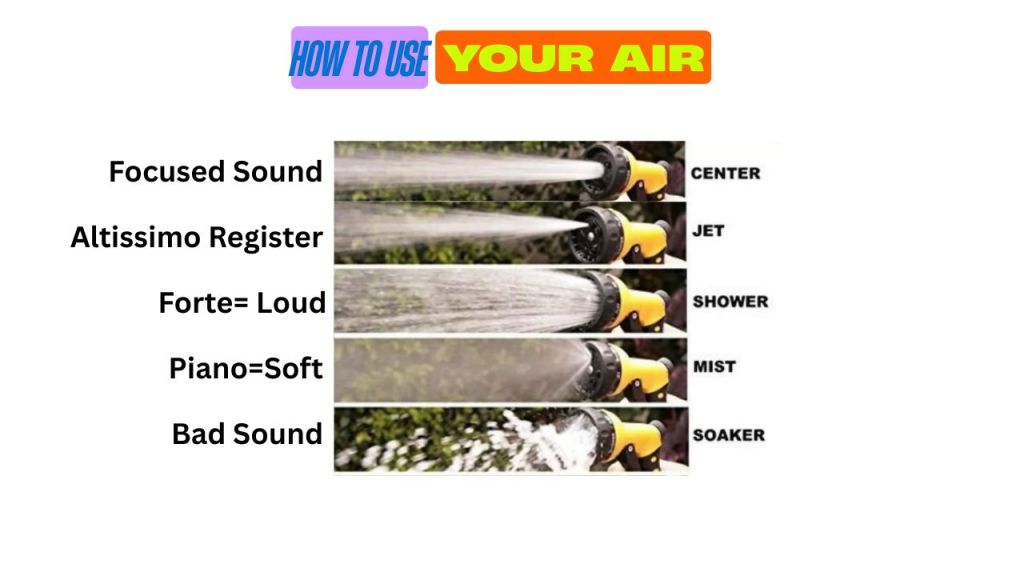
2. Think Like a Garden Hose
One of my favorite teaching analogies is a garden hose.
Imagine adjusting the nozzle on a hose. You can create different streams of water depending on how focused the nozzle is.
Your air works the same way.
- Center = Your normal, focused clarinet tone
- Jet = Fast air for the altissimo register
- Shower = Supported air for louder dynamics
- Mist = Controlled air for soft playing
- Soaker = Weak, unfocused air (the sound we want to avoid)
One of the biggest misconceptions I hear is:
“Playing softly means using less air.”
Actually, soft playing still requires focused air. I often remind my students: Soft doesn’t mean weak.
3. Feel Air Support with a Balloon
Sometimes it’s easier to feel good air support than it is to explain it.
Take a balloon and begin blowing it up. Notice that brief moment just before the balloon expands. That gentle resistance naturally causes your abdominal muscles to engage. That’s very similar to the feeling of supporting your air while playing the clarinet. You’re not forcing the air with your shoulders or throat. Instead, you’re allowing your core to provide a steady, controlled stream of air.
4. Use a Straw to Focus Your Air
A simple drinking straw is one of my favorite teaching tools. Blow through the straw and notice how it naturally focuses your air into one narrow stream. Now place your hand several inches in front of the straw. Can you feel one concentrated stream of air hitting the same spot? That’s exactly the type of focused airflow we want when playing the clarinet.
You can also experiment with directing the straw slightly downward, straight ahead, and slightly upward to become more aware of how air direction affects your tone and response.
5. Practice Away from Your Instrument
Developing better air support doesn’t always require your clarinet.
Two tools I often recommend to my students are:
Breath Builder®: https://amzn.to/4vLQhQu
The Breath Builder helps you practice maintaining a smooth, steady stream of air by keeping a lightweight ball floating in the tube.
It’s excellent for developing consistent airflow and breath control.
Breath Rehab: https://amzn.to/3SH7tbn
The Breath Rehab (an incentive spirometer) encourages slow, full inhalations and helps build awareness of healthy breathing habits before you begin practicing.
Neither tool replaces regular practice, but both can reinforce the breathing habits that lead to better tone and endurance.
(As an Amazon Associate, I earn from qualifying purchases. Thank you for supporting the channel!)
Remember These Three Analogies
Whenever you’re practicing, keep these three images in mind:
🚿 Garden Hose = Focus the air
🎈 Balloon = Support the air
🥤 Straw = Direct the air
If you can remember those three ideas, you’ll be well on your way to producing a richer, more resonant clarinet sound.
Free Download
I’ve created a FREE Clarinet Air Support Guide that includes:
- Diaphragmatic breathing exercises
- Garden hose illustrations
- Balloon and straw activities
- My recommended breathing tools
👉 Download the FREE Clarinet Air Support Guide here.
Watch the Full Video
If you’re a visual learner, I demonstrate each of these exercises step by step in my YouTube lesson.
▶️ Watch: How to Use Air Support on Clarinet (Improve Your Tone Instantly)
🎵 My Amazon Storefront
See all the equipment I personally use and recommend:
https://www.amazon.com/shop/clarinetnotes
Discover more from Clarinet Note Studio
Subscribe to get the latest posts sent to your email.

