
By Julianna Evans
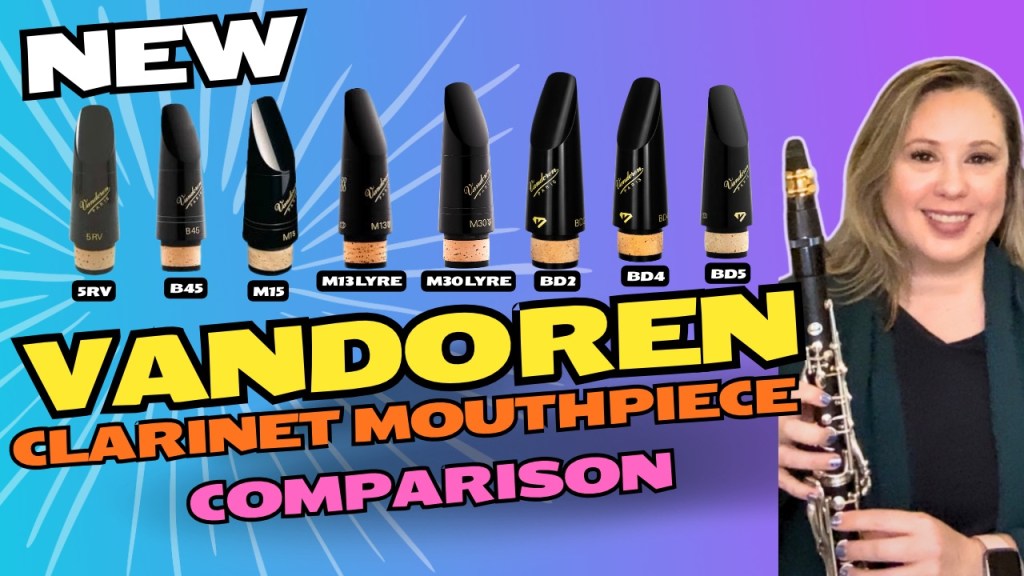
If you’ve ever started shopping for a new clarinet mouthpiece, you probably know how overwhelming the process can be. With so many different models available, it can be difficult to know where to start! One of the most popular clarinet mouthpiece manufacturers is Vandoren, which offers a wide variety of mouthpieces designed to accommodate different playing styles, preferences, and experience levels. But what’s the difference between a 5RV, B45, M13 Lyre, or BD5? And what do terms like Lyre, 13 Series, and Profile 88 actually mean?
In this article, we’re going to take a closer look at eight Vandoren clarinet mouthpieces, explore their individual characteristics, and discuss some of the design features that make each model unique. Also, I want to mention here that I am not sponsored by Vandoren, I just think they make a good mouthpiece at a good price point.
I’ll also share a video comparison where I play all eight mouthpieces so you can hear the differences for yourself!
WATCH THE VIDEO: Vandoren Clarinet Mouthpiece Comparison | Testing 8 Different Models
Understanding Vandoren Mouthpiece Designs
Before comparing individual mouthpieces, it’s helpful to understand some of the terminology you’ll encounter when shopping for Vandoren clarinet mouthpieces. There are three designations in particular that can be confusing: Lyre, 13 Series, and Profile 88. Although these terms are sometimes used interchangeably in conversations about mouthpieces, they actually refer to different aspects of the design.
What Does Lyre Mean on a Vandoren Mouthpiece?
You’ll notice that some Vandoren mouthpieces have a small lyre symbol in their model name. For example, you might see a 5RV and a 5RV Lyre or an M13 and an M13 Lyre. The Lyre designation indicates a variation of the original mouthpiece design. Depending on the model, this can involve changes to the tip opening and facing length. These adjustments can influence how a mouthpiece responds, how much resistance it provides, and how it feels with a particular reed. Importantly, the changes are not identical across every model. A Lyre version isn’t necessarily a standardized adjustment that applies equally to the entire Vandoren lineup.
Let’s look at two examples: 5RV vs. 5RV Lyre
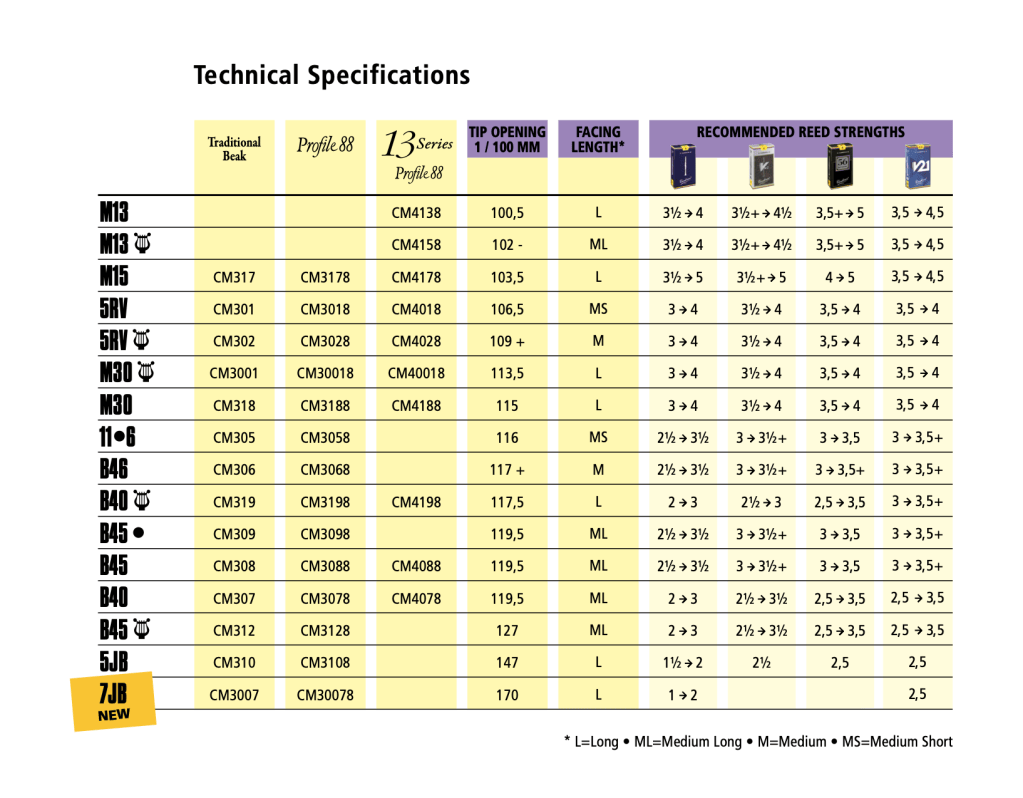
– The standard 5RV has a tip opening of 106.5 and a medium-short facing.
– The 5RV Lyre has a larger tip opening of approximately 109+ and a medium facing.
The Lyre version is therefore a little more open and has a longer facing than the standard 5RV.
M13 vs. M13 Lyre
– The standard M13 has a tip opening of 100.5 and a long facing.
– The M13 Lyre has a tip opening of approximately 102 and a medium-long facing.
Vandoren describes the M13 Lyre as having the same general playing qualities as the M13, but with a more open design that makes playing in the upper register easier. This is an important distinction because two mouthpieces with very similar names can actually feel quite different when you play them! Personally, I prefer the M13 Lyre model, but it’s important to try these models for yourself and see which one works best with your setup.
What Is the Vandoren 13 Series?
Another designation you’ll encounter is the Vandoren 13 Series. The 13 Series was developed specifically for American clarinetists who play at A=440 Hz. Traditional Vandoren mouthpieces are generally designed around the higher European pitch standard, commonly A=442 Hz. The 13 Series provides an alternative designed for the American A=440 pitch standard.
Several popular Vandoren models are available in the 13 Series, including:
- M13, M13 Lyre, M15, M30, 5RV, 5RV Lyre, B40, B45
Important to remember: The 13 Series refers to pitch tuning, not the exterior shape of the mouthpiece. You can have a 13 Series mouthpiece with either a Traditional or Profile 88 beak. If you play in an American school band, community orchestra, or professional ensemble that tunes to A=440, it’s worth paying attention to this designation when purchasing a Vandoren mouthpiece. In this video I test the tuning on a few Vandoren mouthpieces that are not from the 13 series, and they tune quite sharp at A=440. If you play in Europe, you might not want to play on a 13 series mouthpiece if you’re in an ensemble that tunes at A=442 and beyond.
Traditional vs. Profile 88: What’s the Difference?
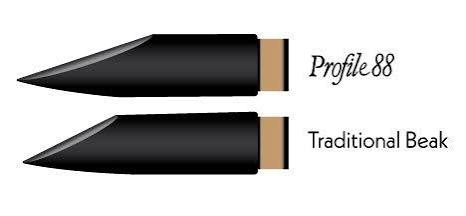
The final designation to understand is the difference between Traditional and Profile 88. Unlike the Lyre designation, which involves changes to the facing and tip opening, Profile 88 refers to the exterior shape and angle of the mouthpiece beak. The beak is the part of the mouthpiece where your upper teeth rest.

Vandoren offers two different exterior designs:
Traditional Beak: The Traditional design features Vandoren’s standard beak angle.
Profile 88:
The Profile 88 features a slightly different exterior beak angle. The purpose of offering these two designs is to give clarinetists options when it comes to comfort, playing position, articulation, and embouchure. One important thing to understand is that Profile 88 does not automatically mean a different tip opening or facing. You can often find the same mouthpiece model in either exterior design. Ultimately, this comes down to personal preference. Some players prefer the feel of the Traditional beak, while others find Profile 88 more comfortable. Neither design is necessarily better. It’s simply another option to consider when choosing a mouthpiece.
Comparing 8 Vandoren Clarinet Mouthpieces
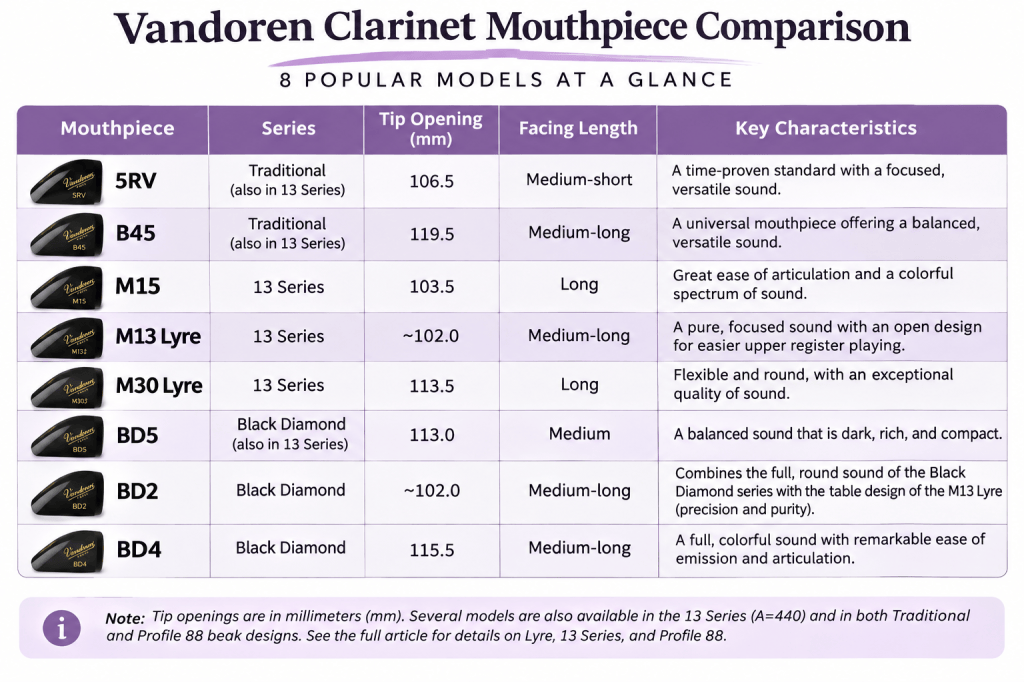
Now that we’ve covered some of the terminology, let’s look at eight different Vandoren mouthpieces. For my video comparison, I selected eight models that represent a variety of Vandoren’s traditional and Black Diamond designs. I used the same reed and ligature for each mouthpiece and tried to keep the playing examples consistent so you could hear the differences in tone color, response, and overall sound. I purchased all eight mouthpieces myself over the last couple of years, primarily so my clarinet students could experiment with different models before deciding which mouthpiece to purchase. Let’s take a closer look at each one.
1. Vandoren 5RV
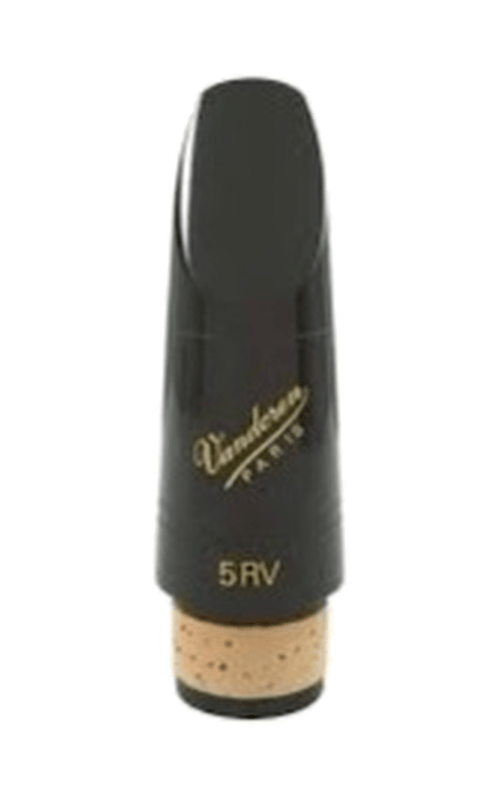
The Vandoren 5RV is one of the company’s most recognizable mouthpieces and has been a familiar choice among clarinetists for many years. Vandoren describes it as a time-proven standard for professional musicians.
Specifications:
– Tip opening: 106.5
– Facing length: Medium-short
The 5RV has a relatively closed tip opening compared with several of the other models in this comparison. Because of its design, it is a mouthpiece that many students encounter early in their clarinet studies. It’s also a familiar option for advancing players. If you’re currently playing on a 5RV, you might also want to explore the 5RV Lyre, which offers a slightly larger tip opening and longer facing.
2. Vandoren B45
The B45 is probably one of the most recognizable mouthpieces in Vandoren’s lineup. Vandoren describes it as a universal mouthpiece, and its combination of tip opening and facing length makes it a versatile option for a variety of clarinetists.
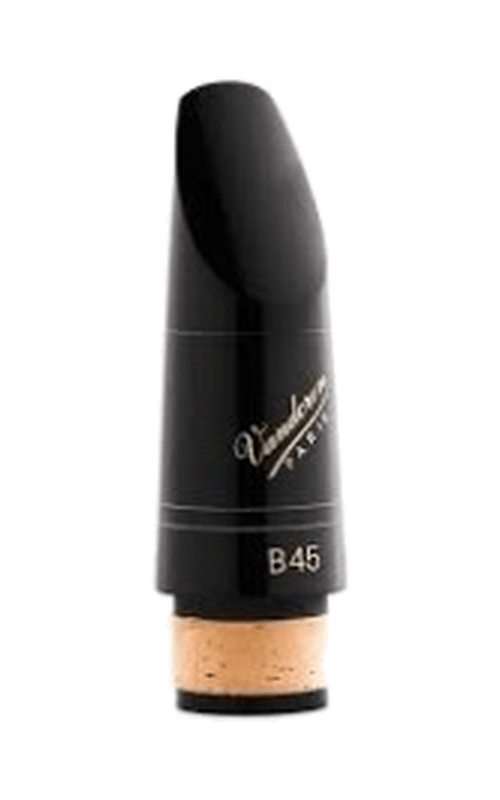
Specifications:
– Tip opening: 119.5
– Facing length: Medium-long
Compared with the 5RV, the B45 has a considerably larger tip opening and a longer facing. This makes it an interesting mouthpiece to compare if you’re experimenting with different combinations of tip openings and facing lengths. The B45 is also available in the 13 Series for players who need a mouthpiece designed for A=440 pitch.
3. Vandoren M15
The M15 is another popular Vandoren mouthpiece, particularly among players looking for a different combination of tip opening and facing length.
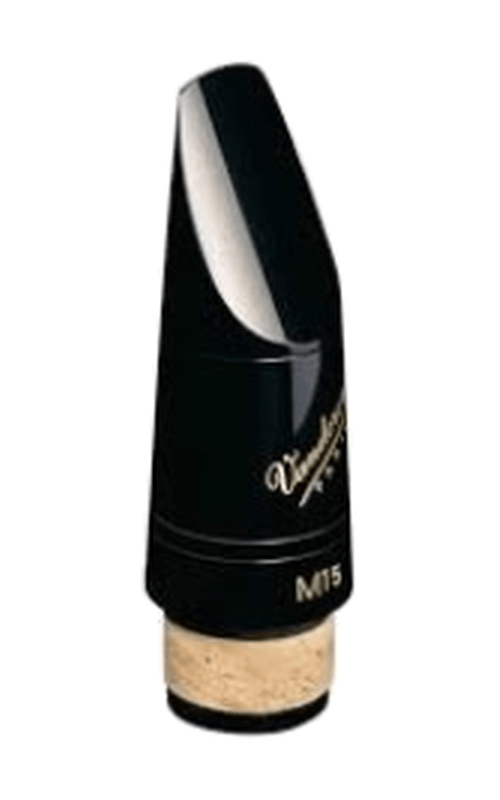
Specifications:
– Tip opening: 103.5
– Facing length: Long
Vandoren describes the M15 as offering great ease of articulation and a colorful spectrum of sound. One interesting feature of the M15 is its relatively small tip opening combined with a long facing. It’s a good reminder that tip opening alone doesn’t determine how a mouthpiece feels or plays. Facing length is another important part of the equation. The M15 was designed as part of Vandoren’s 13 Series, making it an option for American clarinetists playing at A=440.
The M13 Lyre is an interesting mouthpiece because it combines a relatively small tip opening with a medium-long facing.
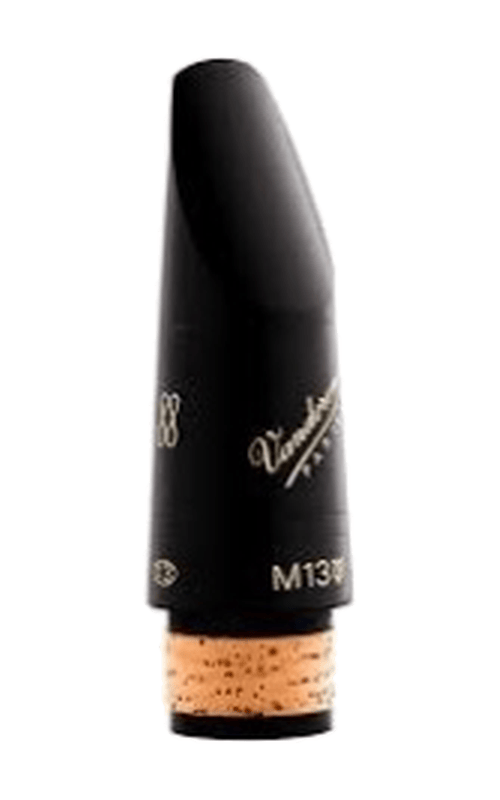
Specifications:
– Tip opening: Approximately 102
– Facing length: Medium-long
– Series: 13 Series
Vandoren describes the M13 Lyre as having the same general qualities as the standard M13, but with a more open design that makes playing in the upper register easier. Vandoren also describes its sound as particularly pure. If you’re comparing the M13 and M13 Lyre, remember that the standard M13 has a smaller tip opening of 100.5 and a longer facing. Although these mouthpieces share a similar name, the differences in their facing designs can make them feel quite different.
Next is the M30 Lyre. This mouthpiece is particularly interesting because Vandoren describes it as similar to the 5RV Lyre, but with a larger tip opening and longer facing.
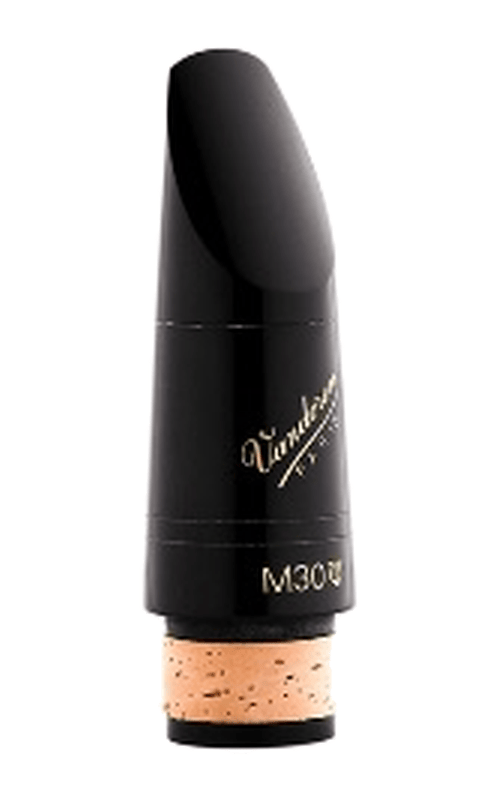
Specifications:
– Tip opening: 113.5
– Facing length: Long
According to Vandoren, this combination provides flexibility and roundness, along with an exceptional quality of sound. The M30 Lyre is also available in a 13 Series version. If you’re exploring different Vandoren mouthpieces, this is another model worth adding to your comparison list.
6. Vandoren BD5 – Black Diamond
Now we’re moving into Vandoren’s Black Diamond series! The Black Diamond mouthpieces feature a different internal and external design from Vandoren’s traditional mouthpieces. According to Vandoren, the goal is to provide a full sound with depth and color, particularly in the upper register. Let’s start with the BD5.
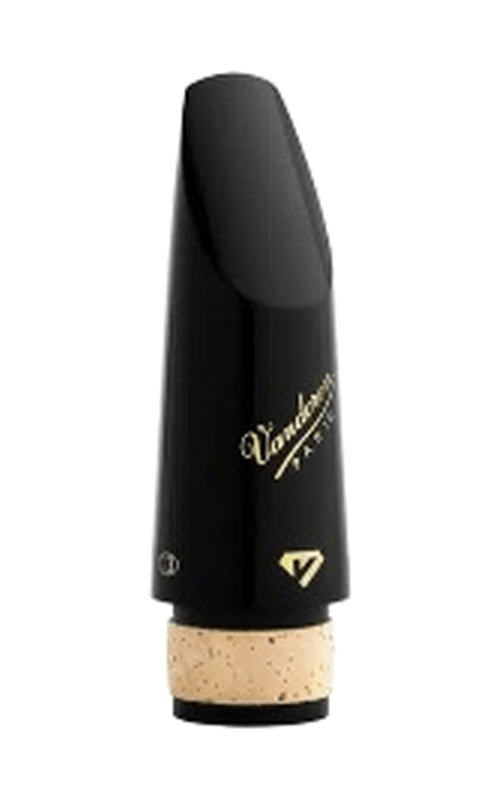
Specifications:
– Tip opening: 113
– Facing length: Medium
Vandoren describes the BD5 as offering a balance between a dark, rich, yet compact sound. The BD5 is also available in a 13 Series version. One of the interesting things about the Black Diamond series is that it offers another approach to mouthpiece design while maintaining the qualities that many clarinetists look for in a Vandoren mouthpiece.
7. Vandoren BD2 – Black Diamond
The BD2 is another member of Vandoren’s Black Diamond family.
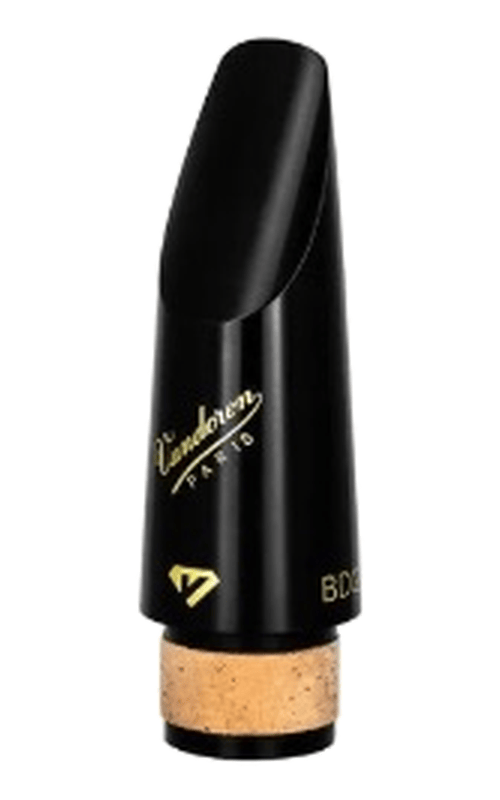
Specifications:
– Tip opening: Approximately 102
– Facing length: Medium-long
What’s particularly interesting about the BD2 is its relationship to the M13 Lyre. Vandoren describes the BD2 as combining the full, round sound of the Black Diamond series with the table design of the M13 Lyre, which is associated with precision and purity. In other words, the BD2 brings together some of the characteristics of two different Vandoren designs. This makes it an interesting model to compare directly with the M13 Lyre.
8. Vandoren BD4 – Black Diamond
Finally, we have the BD4!
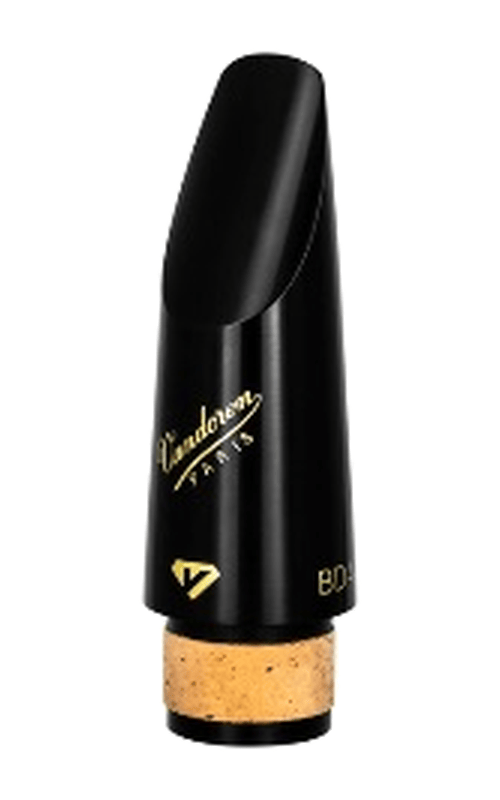
Specifications:
– Tip opening: 115.5
– Facing length: Medium-long
Vandoren describes the BD4 as sharing the same general sound qualities as the BD5, with remarkable ease of emission and articulation. Like the other Black Diamond models, it’s designed to offer a full sound with depth and color, particularly in the upper register. With its larger tip opening compared with the BD5, the BD4 provides another option within the Black Diamond family.
Which Vandoren Clarinet Mouthpiece Is Best?
After comparing eight different Vandoren mouthpieces, you might be wondering which one is the best. My answer? It depends! There isn’t one mouthpiece that will work perfectly for every clarinetist. A mouthpiece that feels wonderful for one player might not feel comfortable or produce the same results for someone else. I personally prefer a medium to medium-long facing with a tip opening around 112-115. However, that’s just my preference, that might not work for you.
There are several factors that influence how a mouthpiece feels and sounds:
1. Tip Opening
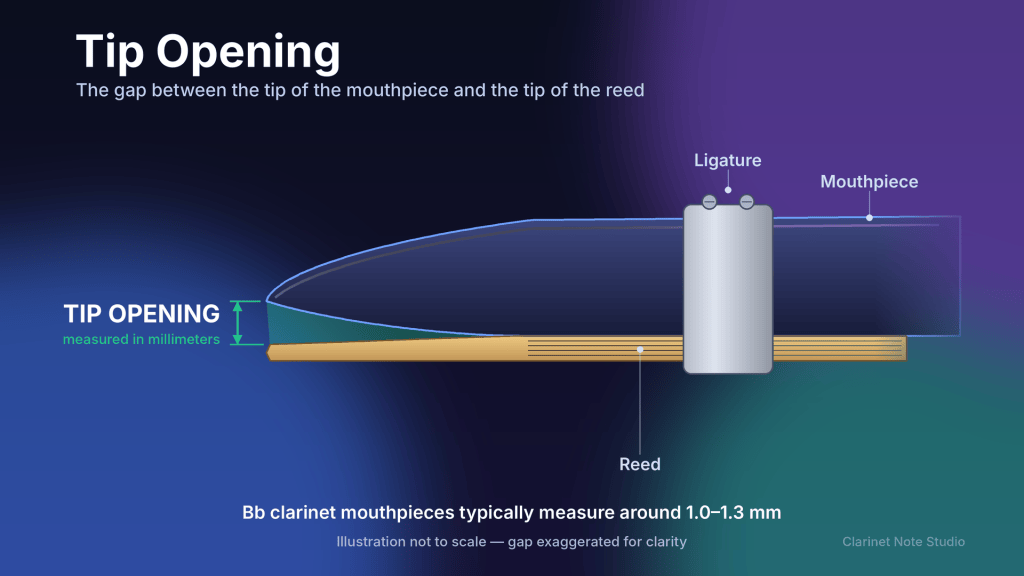
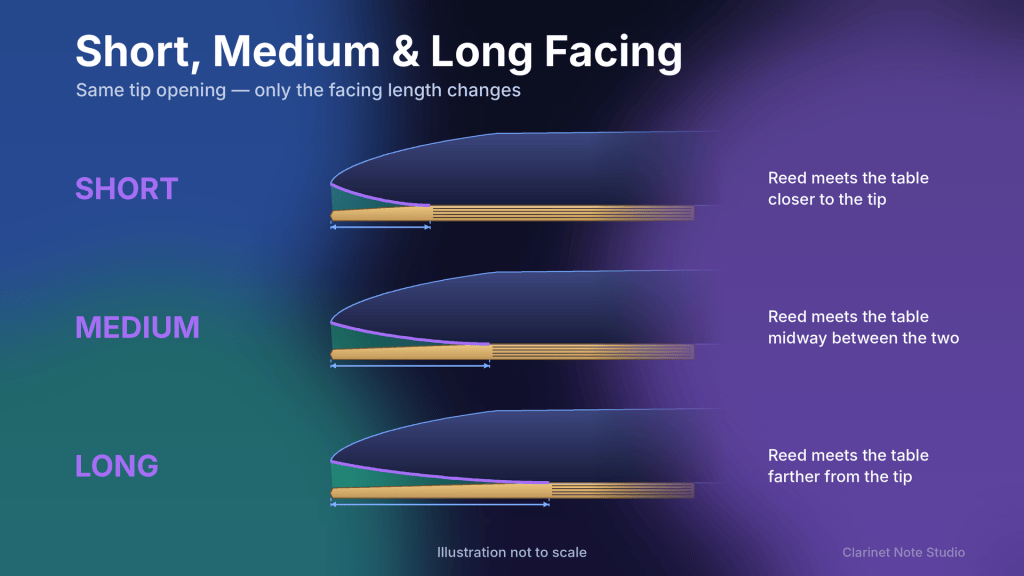
The tip opening is the distance between the tip of the reed and the tip of the mouthpiece. A larger or smaller opening can influence resistance, reed compatibility, and how the mouthpiece responds.
2. Facing Length
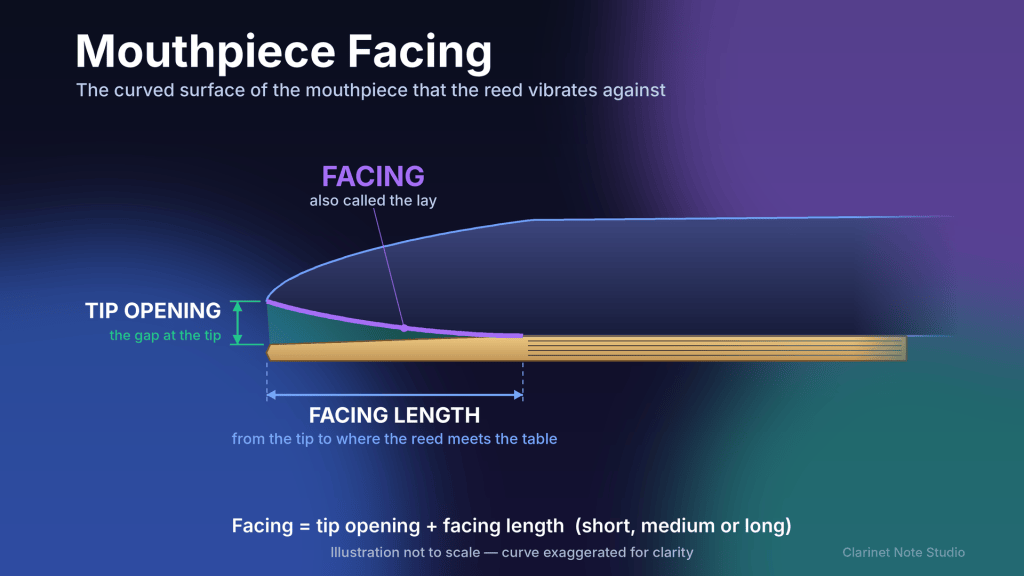
The facing is the curved portion of the mouthpiece where the reed and mouthpiece separate as you move toward the tip. Different facing lengths can affect how a mouthpiece feels and interacts with different reeds.
3. Reed Strength and Cut
Your reed plays a huge role in how a mouthpiece performs. A particular reed strength that works beautifully on one mouthpiece may not be the right choice for another. The reed cut also matters, as different designs can interact differently with a mouthpiece facing.
4. Embouchure and Air Support
Your embouchure, air support, and overall playing technique all influence your experience with a mouthpiece. A mouthpiece isn’t going to automatically fix issues with tone production, articulation, or intonation.
5. Personal Preference
At the end of the day, comfort and sound are incredibly personal. Some clarinetists prefer a darker, rounder sound, while others are looking for a more focused or brilliant tone. The best way to find your ideal mouthpiece is to experiment with different models and see what works with your playing style.
My Recommendation: Try Before You Buy!
If you have a music store nearby that carries Vandoren mouthpieces, I always recommend trying several models before making a purchase. If you’re a student, ask your private teacher whether they have different mouthpieces available for you to experiment with. If you’re a teacher, having a small collection of mouthpieces available for students to try can be incredibly helpful. This is actually one of the reasons I purchased the eight mouthpieces featured in my video. I wanted my students to have an opportunity to experiment with different options before investing in a new mouthpiece. You may discover that a mouthpiece you never considered ends up being your favorite!
Want to hear how these eight mouthpieces sound? Watch My Vandoren Mouthpiece Comparison Video. In my video, I play each model so you can compare their tone, response, and overall sound characteristics.
Featured in the video:
– Vandoren 5RV, B45, M15, M13 Lyre, M30 Lyre, BD5, BD2, BD4
Final Thoughts
Choosing a clarinet mouthpiece can feel overwhelming, especially when there are so many different models and designations to consider. Hopefully, this guide has helped clarify some of the differences between Vandoren’s mouthpieces and given you a better starting point when exploring your options. Remember that the tip opening, facing length, reed, and your individual playing preferences all work together to influence your sound. Don’t be afraid to experiment!
Happy practicing!
Julianna❤️
Shop the Mouthpieces Featured in This Article
🔗Here are links to the eight Vandoren mouthpieces featured in my comparison:
Visit Vandoren’s Official Website https://vandoren.fr/en/
*Disclosure: Some links in this article are Amazon affiliate links. As an Amazon Associate, I earn from qualifying purchases at no additional cost to you. Thank you for supporting Clarinet Note Studio!*
—
More Clarinet Resources
– 🛒My Recommended Clarinet Equipment
– 📕Free Clarinet Resources for Students and Teachers
– 🎵Download My Free Beginner’s Guide to Clarinet
– ☕️Support Clarinet Note Studio on Ko-fi
Discover more from Clarinet Note Studio
Subscribe to get the latest posts sent to your email.

