
By Julianna Evans
A Comparison of the Classic, European, French, and Signature Cuts
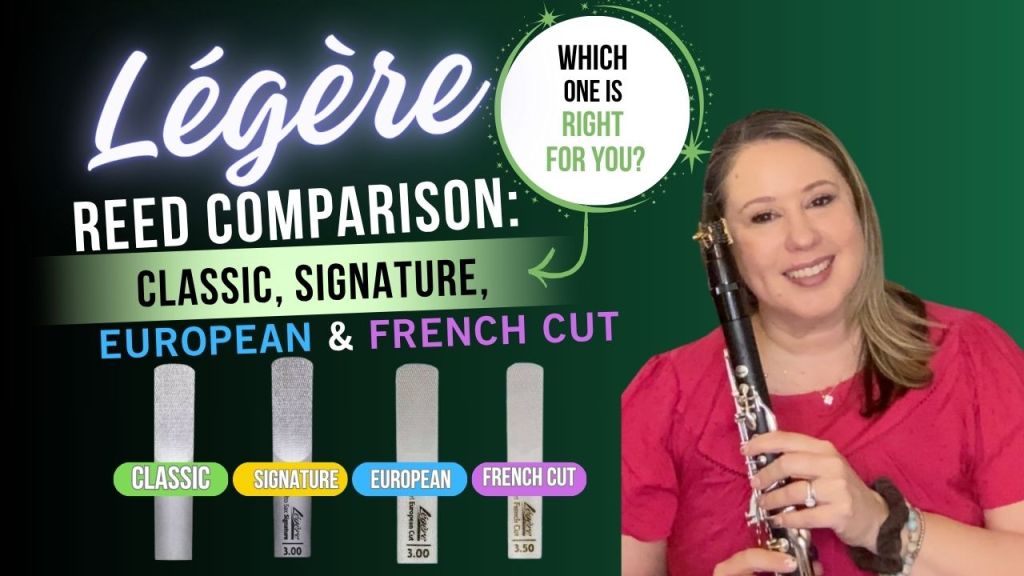
Wondering which Légère clarinet reed is right for you? In this guide, I’ll compare all four Légère cuts, explain how they compare to popular Vandoren cane reeds, and share which reeds I recommend for beginning, intermediate, and advanced clarinetists.
🤔 Why I Made This Comparison
One of the questions I hear most often from my students is, “Which Légère reed should I buy?”
It’s a great question because Légère now offers four different clarinet reed cuts, and while they may look similar at first glance, they each have their own unique playing characteristics.
This comparison was actually inspired by several of my students. Over the course of just two weeks, I had three different students tell me they hadn’t been practicing because “none of my reeds were working.” If you’ve been playing the clarinet for any length of time, you’ve probably experienced the same frustration. One day you have several reeds that play beautifully, and the next day they suddenly feel completely different.
Rather than guessing which reed might work best, I decided to test all four Légère cuts side by side. I compared each one to a similar Vandoren cane reed, played them on the exact same setup, and even measured them using a Perfect-a-Reed micrometer. My goal isn’t to tell you which reed you should play. Instead, I want to help you understand the strengths of each cut so you can make the best decision for your own setup.
Why Consider Synthetic Reeds?
I’ll be honest—I still play on cane reeds most of the time. I enjoy the flexibility they give me for phrasing, tone color, and shaping musical lines. For many performances, they’re still my first choice.
That being said, synthetic reeds have improved tremendously over the last decade. They respond more naturally than they used to, they’re remarkably consistent, and I know several professional clarinetists who have switched almost exclusively to synthetic reeds.
For me, I don’t see this as an “either-or” decision anymore. I think both cane and synthetic reeds have their place.
Here are a few reasons synthetic reeds have become so popular:
✅ They don’t need to be soaked before playing.
✅ They’re much less affected by changes in temperature and humidity.
✅ They typically last much longer than cane reeds (around 3-6 months).
✅ They’re an excellent choice for outdoor concerts, ceremonies, and travel (especially to higher-altitude destinations).
Whenever I know I’ll be performing outside or in unpredictable weather, I almost always pack a synthetic reed. It’s one less thing I have to worry about before walking on stage.
My Test Setup
Whenever I compare equipment, I try to eliminate as many variables as possible. For this test, the only thing that changed was the reed.
I used the same clarinet, mouthpiece, ligature, barrel, microphone, and recording space for every playing example so that the differences you hear are due to the reeds—not changes in the equipment.
| 🎵 Equipment | What I Used |
| Clarinet | Buffet Festival |
| Mouthpiece | Pyne M Bore |
| Ligature | Silverstein Hexa |
| Barrel | Polaris Royal Global |
| Reference Reed | Vandoren V12 Strength 3.5 |
I also measured each reed with a Perfect-a-Reed micrometer. While these measurements don’t tell us everything about how a reed will play, they provide another interesting way to compare the different cuts.
🎵 Légère Classic
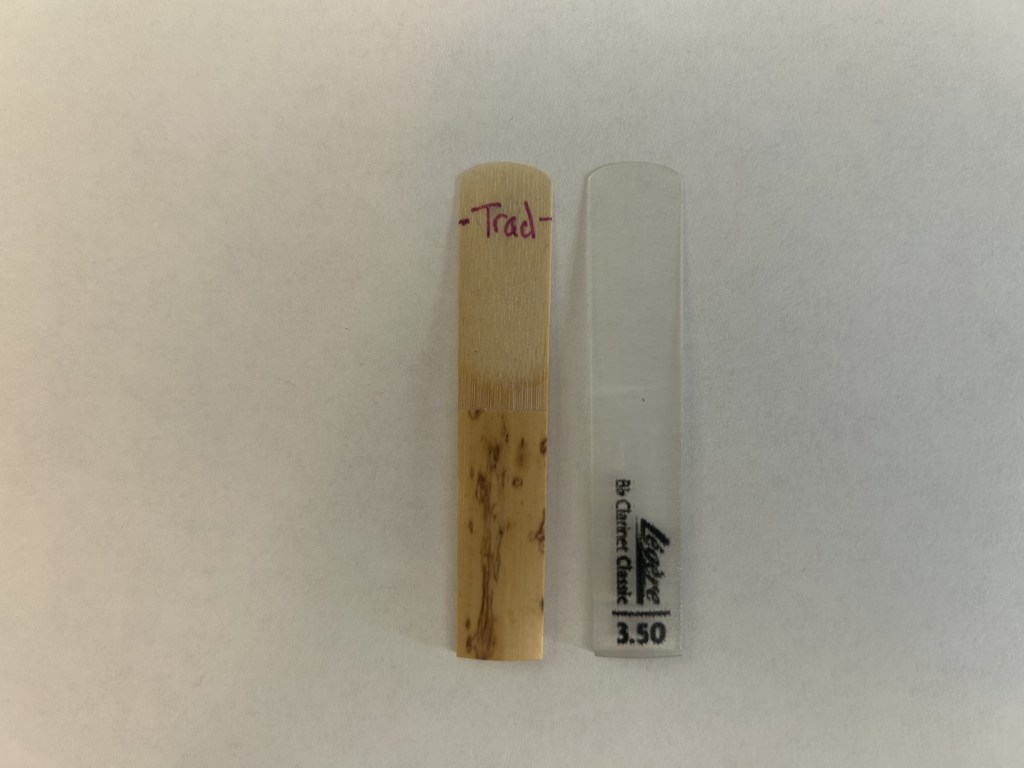
Looking at the shape, the Classic reminds me the most of a Vandoren Traditional reed.
According to Légère, the Classic offers a darker tone, easy projection, and medium response.
I’d say that’s a pretty accurate description.
It has a warm, centered sound and projects nicely.
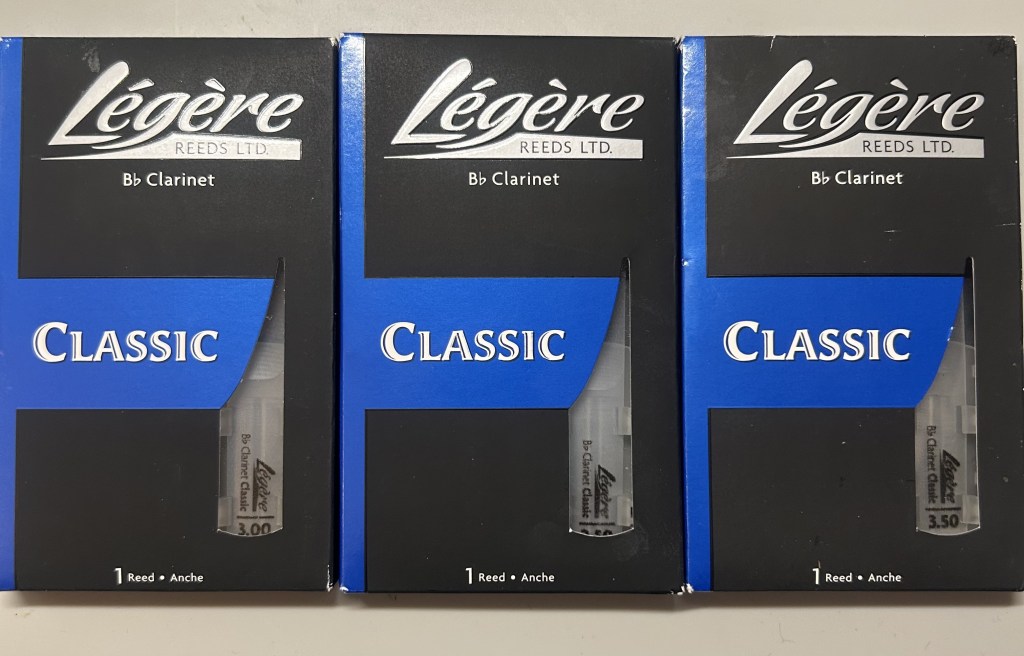

On Légère’s website they recommend getting a 3 or 3.5 if you play on a Vandoren V12 3.5. So I did buy a 3.5. On my setup, though, I found that the strength 3 didn’t quite provide enough support in the altissimo register. The upper notes felt just a little unstable. So I did buy a 3.5, and I felt on my setup I needed just a little more support with anything above altissimo E. I wish they made a 3.75 or a 4 in this cut of reed
I will say that this cut does work for my intermediate playing students. If it helps you to know this, I think the 2.5 or 3 works well for a student who is playing on a Vandoren V12 strength 3. I compared each Légère reed to the cane reed that I felt had the most similar cut.
⭐ Légère European Cut
(My Favorite)
This is the reed that surprised me the most.
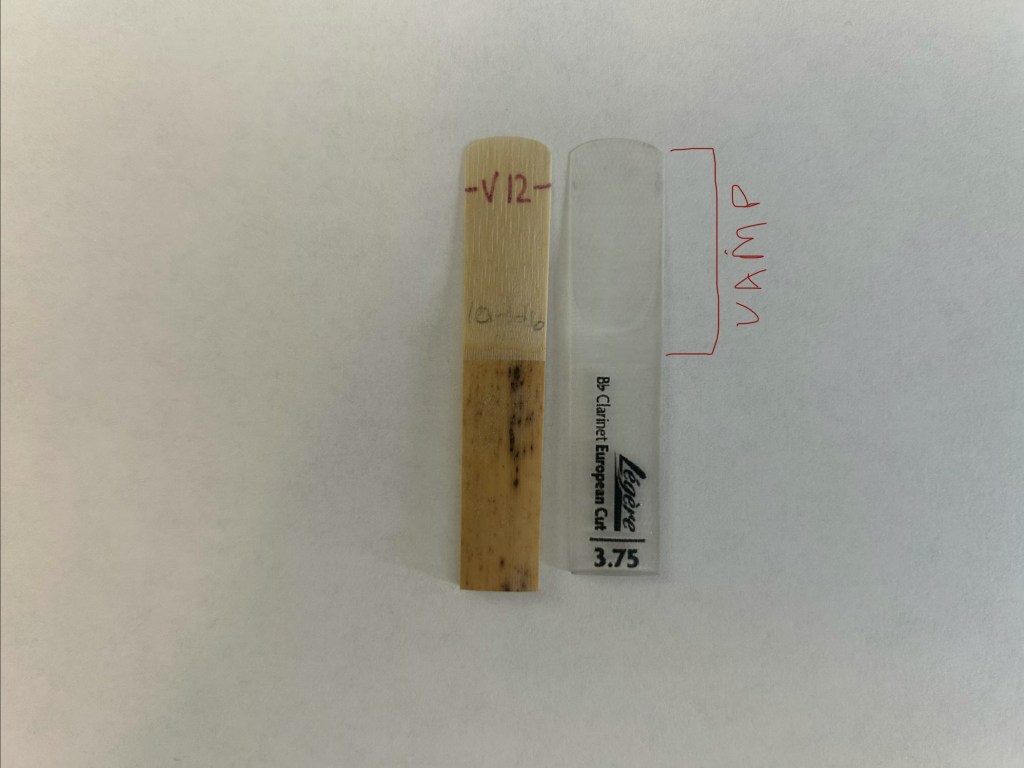
The European Cut reminds me of a Vandoren V12.
The reed itself is a little wider and slightly shorter than the V12, but the vamp-to-tip distance is very similar.
Légère describes this reed as brighter, with easy projection and easy response. I completely agree. I find that articulation is probably the easiest on the European cut between all of the legere cuts.
On my setup it responds immediately, articulates cleanly, and has a lively feel that I really enjoy.
This has become my favorite Légère cut, and it’s also the one I’ve had the most success recommending to many of my students.
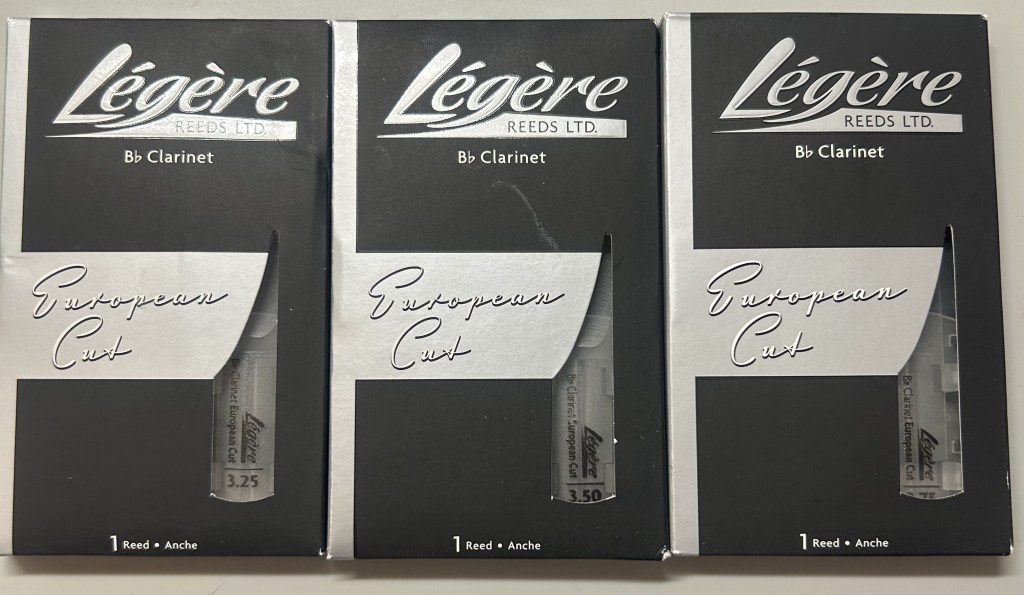
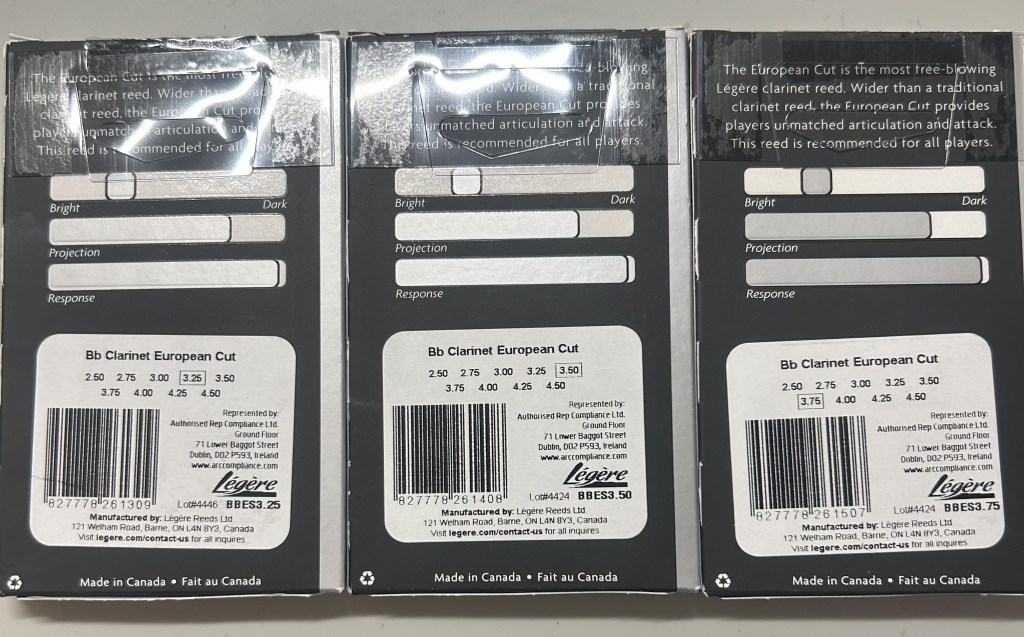
I will say it’s important to find the correct strength for you. According to the strength chart they recommend between the 3.25 or 3.5 if you play a Vandoren V12 strength 3.5, however I found that I had a difficult time getting the altissimo notes to speak, I sized up to a 3.75, but still can’t get some of the notes above altissimo G to come out cleanly. I might size up to a 4 and see how that works for me,
I’ll also say that one of my students who typically plays on a Vandoren 3 sounds great on the European cut 3.5, but also was struggling with getting the altissimo notes to speak cleanly on it compared to the cane reed. So I’m going to have her try the 3.75 which I think will work well. If you’re a beginner, I like that the European cut comes in quarter strengths and not just half strength like the classic.
💡 Teacher’s Tip: If you’re unsure which Légère reed to try first, this is usually the model I recommend to my students because of its quick response and clean articulation.
🎵 Légère French Cut
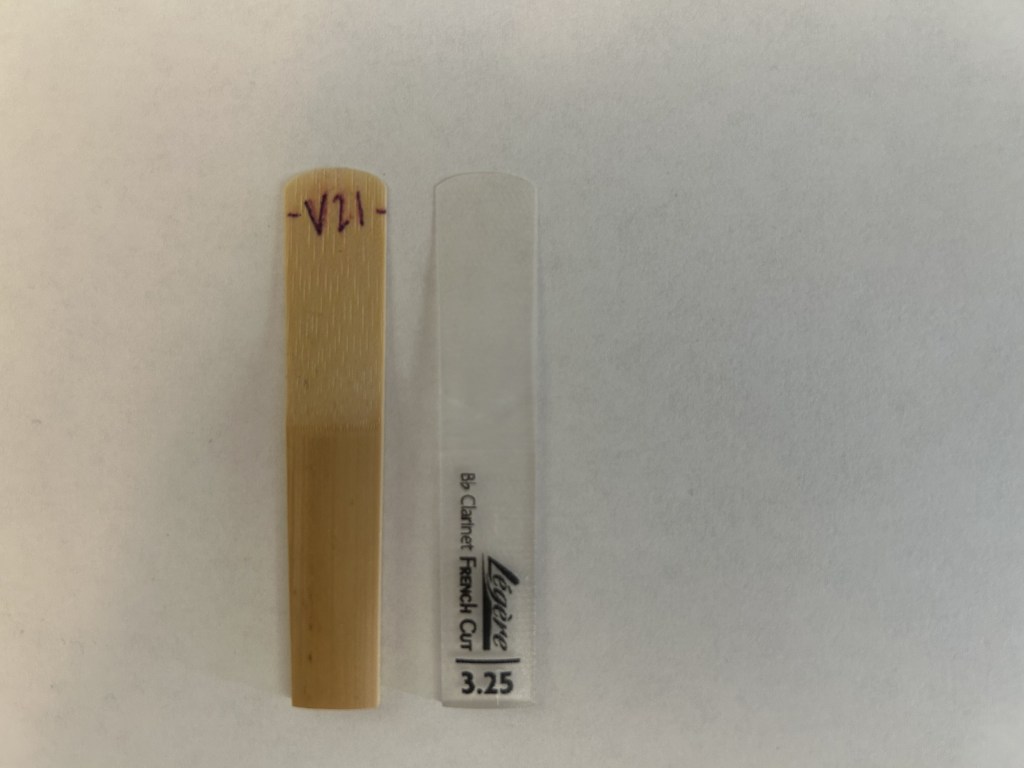
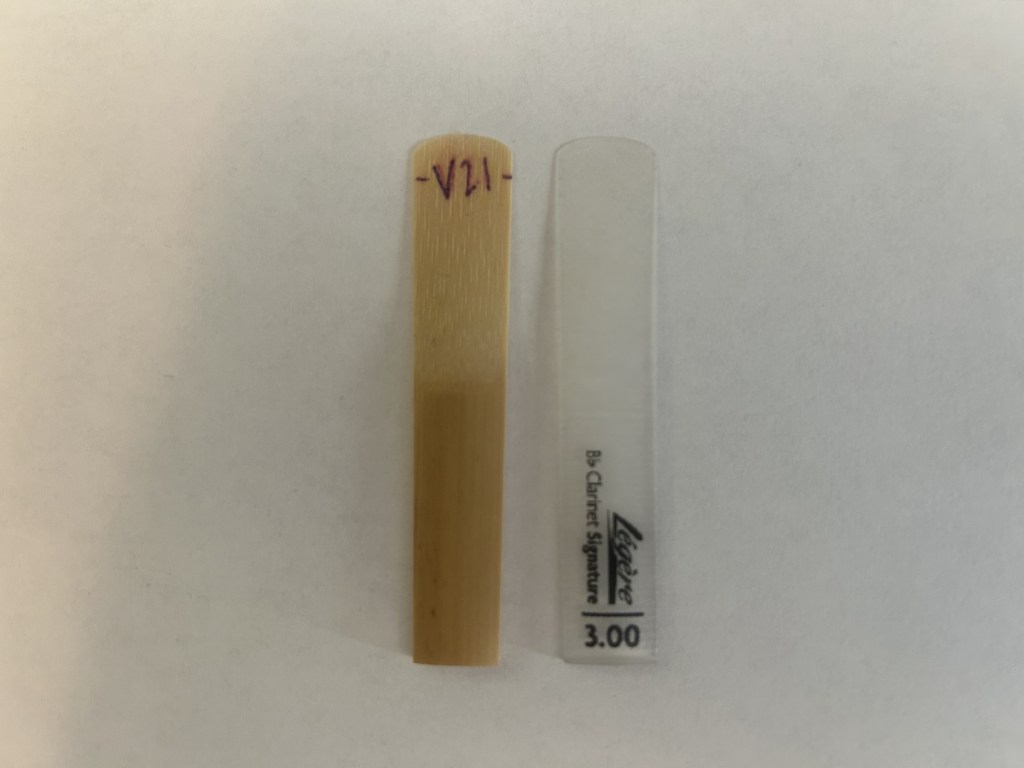
The French Cut reminds me of a Vandoren V21.
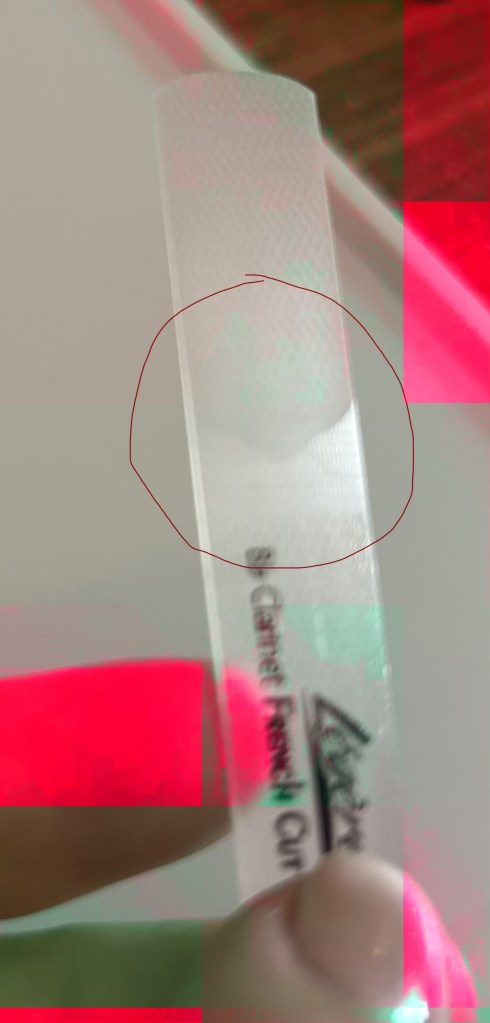
One thing I noticed right away is the distinctive V-shaped cut in the vamp, and the vamp extends higher than it does on the V21.
Légère describes the French Cut as darker, with good projection and easy response.
I definitely hear the darker sound.
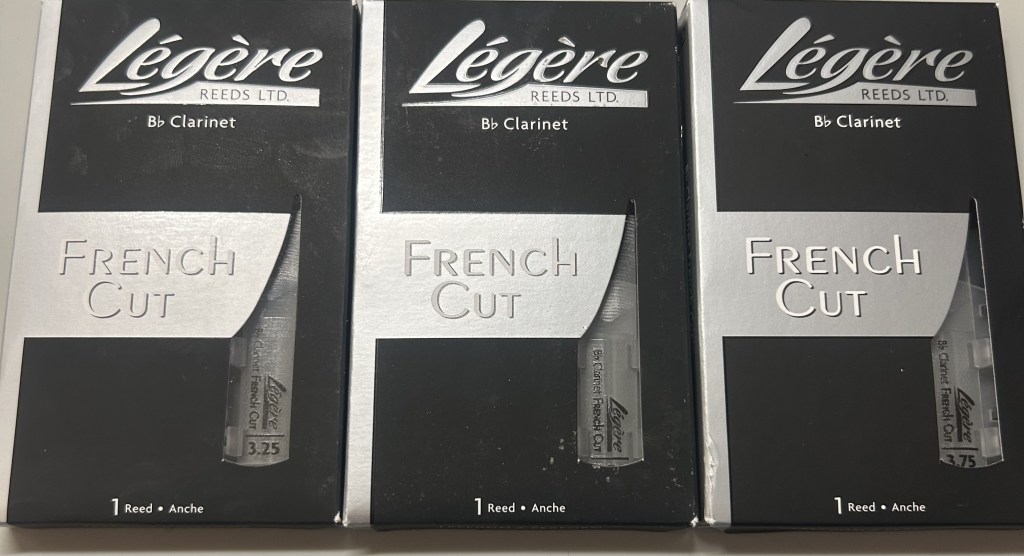
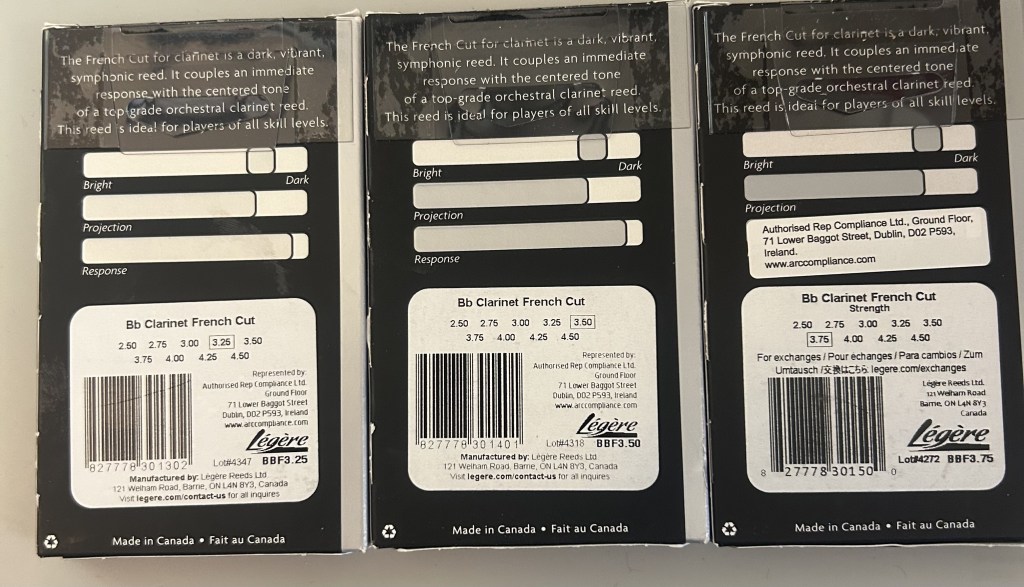
On my setup, though, the tone feels just a little fuzzy and not quite as focused as I’d like. However depending on what I’m playing, sometimes I like a little heavier setup. I originally bought this in a 3.25, then a 3.5, but finally settled on the 3.75. I felt like the altissimo range had more stability with the 3.75. This cut is a little more difficult to articulate (a little more resistant), but it’s consistent across the different registers. I had my students try this cut and most of them found it a little too resistant for them at this time. In my opinion I think this reed would be good more a more advanced player looking for some resistance in their setup.
🎵 Légère Signature
The Signature also reminds me of the Vandoren V21.
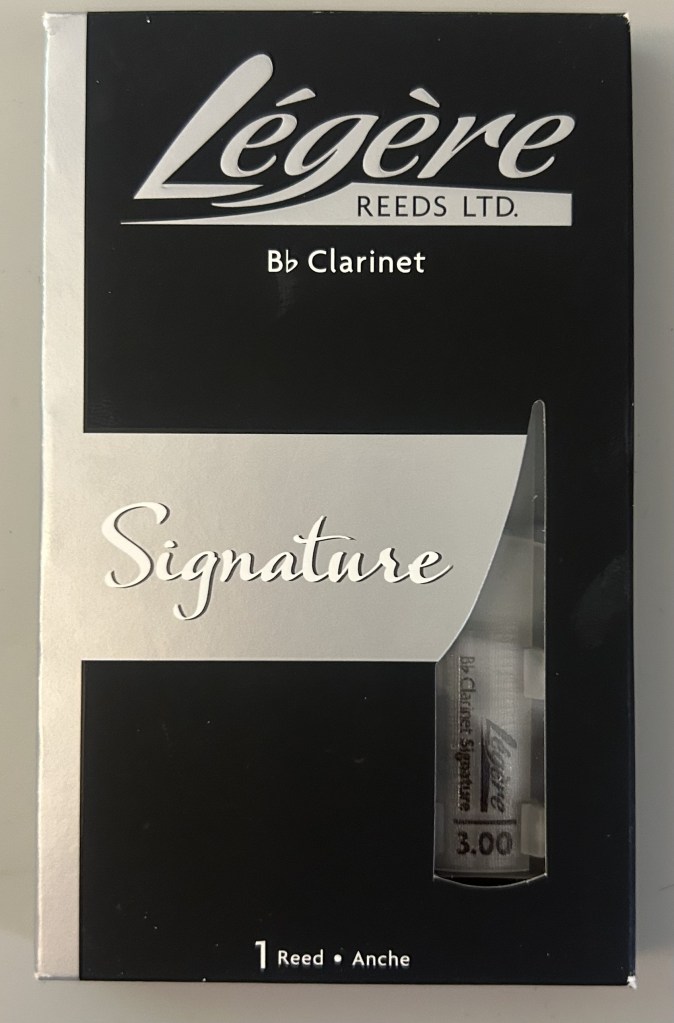
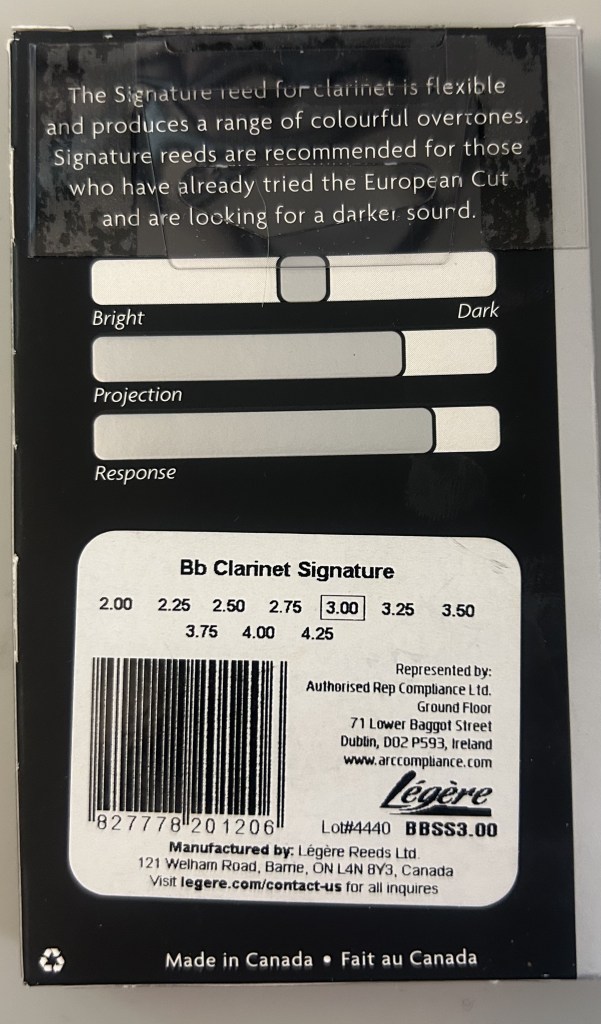
Légère describes the Signature as being right in the middle—balanced between dark and bright—with medium projection and medium response.
My experience was a little different.
On my setup it feels noticeably more resistant than the other cuts. For reference I bought the signature in the strength 3 (the website recommended 3-3.25) and I felt the 3 was heavy for my setup.
The response feels a little stiff for my personal preference.
Some players really like that extra resistance because it gives them something to lean against.
For me, though, I preferred the quicker response of the European Cut or the resistance of the French cut. For my students who are beginners and intermediate players I would recommend the European or Classic cut.
📏 Do Reed Measurements Really Matter?
One of the questions I expect after publishing this comparison is whether reed measurements actually matter.
The short answer is yes—but only to a point.
The measurements I took with the Perfect-a-Reed are interesting because they help explain some of the differences we’re seeing between the various reed cuts. However, they don’t predict how a reed will play.
Your mouthpiece, ligature, embouchure, air support, and personal sound concept all play a much larger role in determining whether a reed is a good fit for you.
I like to think of the measurements as just one piece of the puzzle. They’re fascinating if you’re a reed nerd like I am, but at the end of the day, what matters most is how the reed feels and sounds when you play it.
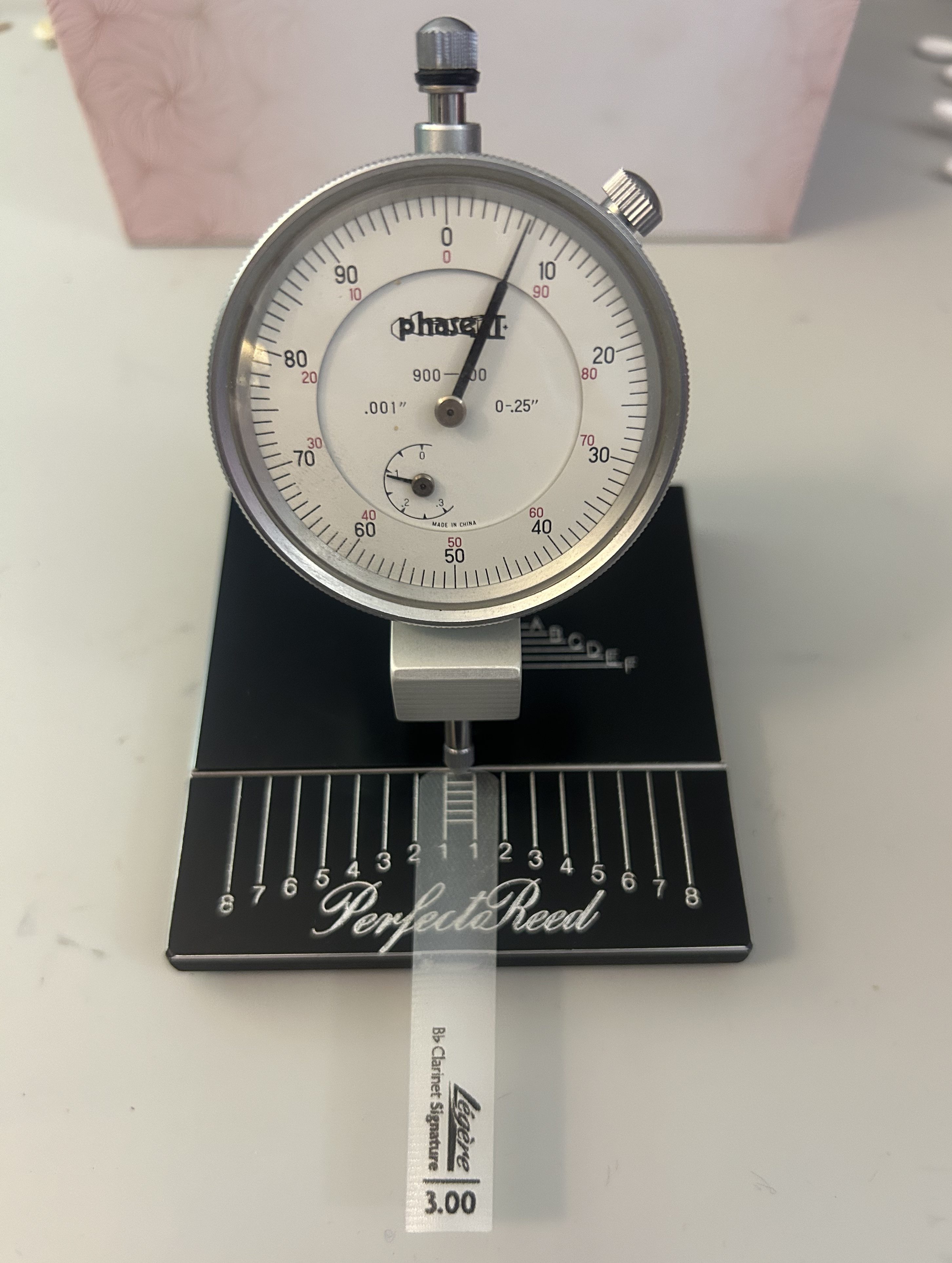
The tip of the Légère Signature reed being measured by the Perfect-a-Reed Micrometer
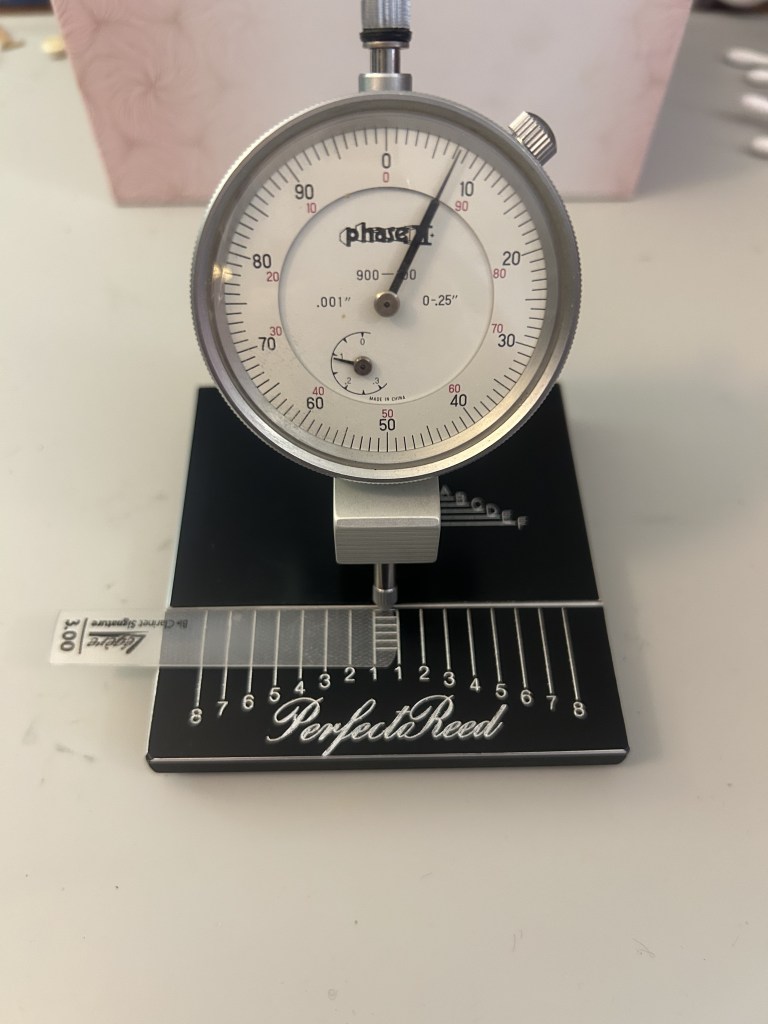
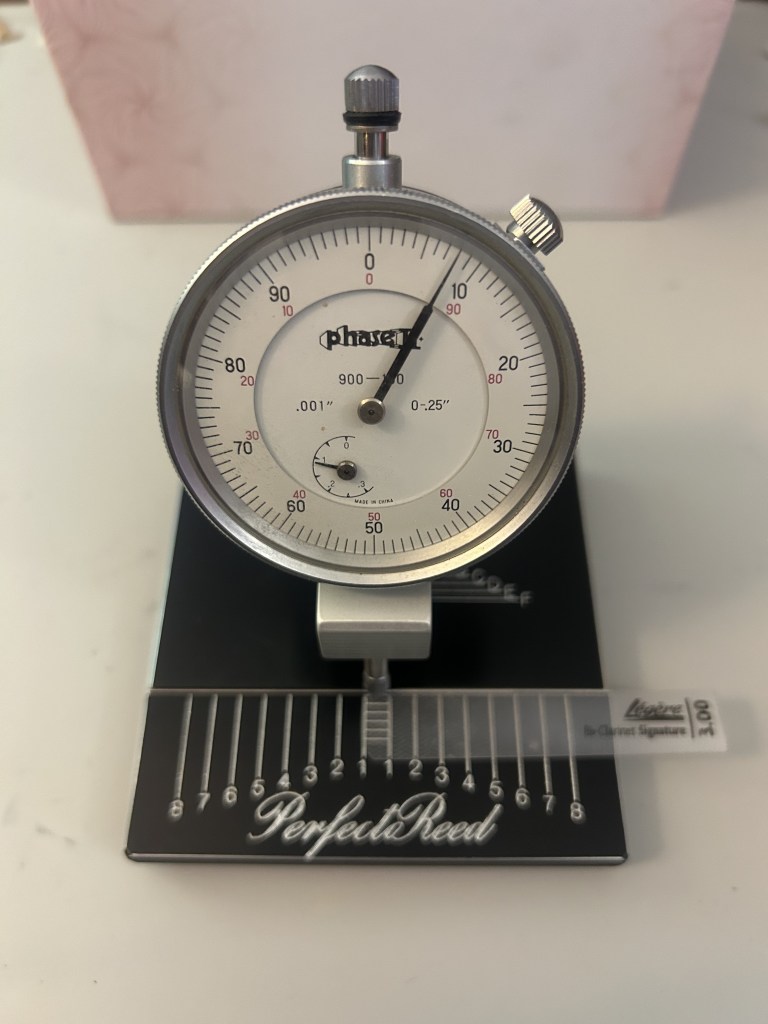
Years ago, one of my college professors told me that an ideal cane reed often measured at the tip somewhere around:
Center: 4 mm
Left: 7 mm
Right: 7 mm
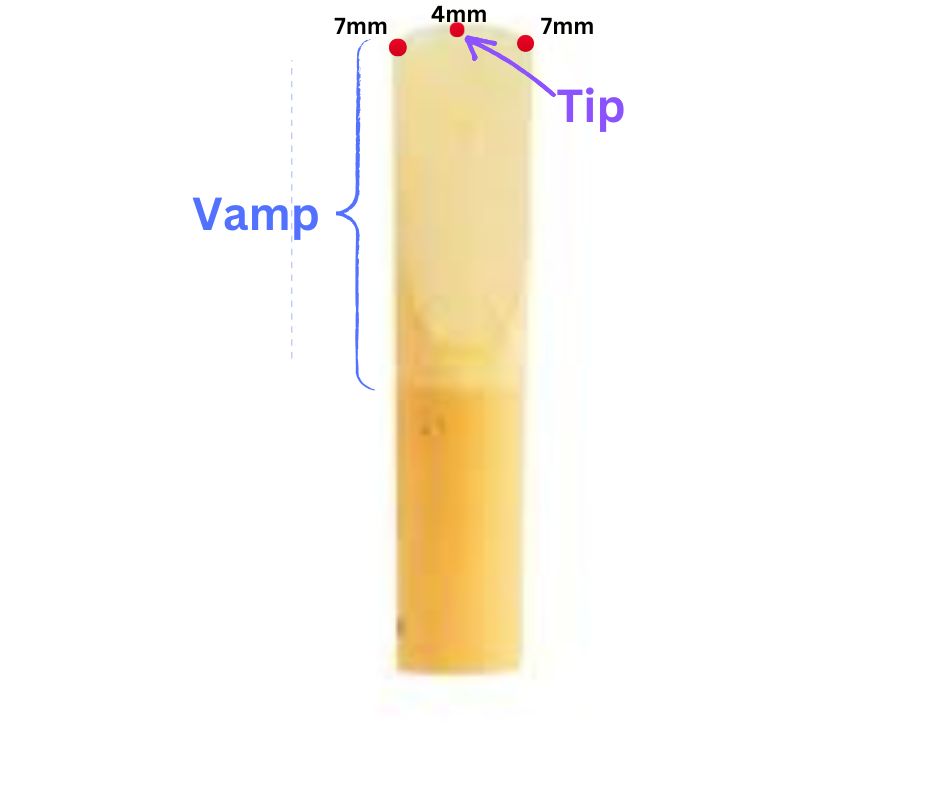
Of course, that’s only a guideline.
Every player is different.
Every mouthpiece is different.
Every embouchure is different.
🏆 My Recommendations
After spending time with all four reed cuts, I’ve found myself recommending different reeds depending on a player’s experience level and musical goals.
For most beginning and intermediate clarinetists, I usually recommend either the Classic or the European Cut because they offer excellent response and are generally easier to play.
For more advanced players looking for additional resistance or a darker sound, the French Cut and Signature are both worth considering.
Personally, the European Cut has become my favorite because it gives me the best combination of response, articulation, projection, and tone on my setup. It’s also the reed I’ve had the most success recommending to my own students.
🛒 Shop My Légère Reed Recommendations (The links below are Amazon affiliate links. As an Amazon Associate, I earn from qualifying purchases at no additional cost to you. Thank you for supporting Clarinet Note Studio)
🎵 Beginning Clarinetists
(Comparable to a Vandoren cane reed strength 2–2.5)
Légère Classic Strength 2: https://amzn.to/4wva6vS
Légère Classic Strength 2.5: https://amzn.to/3RuOznV
Légère European Cut 2.5: https://amzn.to/4yPuABd
Légère European Cut 2.75: https://amzn.to/4fEbWU7
🎵 Intermediate Clarinetists
(Comparable to a Vandoren cane reed strength 3–3.5)
Légère Classic Strength 2.5: https://amzn.to/3RuOznV
Légère Classic Strength 3: https://amzn.to/4gV13PW
Légère European Cut 3: https://amzn.to/4fX7fG5
Légère European Cut 3.25: https://amzn.to/4pPIyyU
🎵 Advanced Clarinetists
(Comparable to a Vandoren cane reed strength 3.5–4)
Légère Classic Strength 3: https://amzn.to/4gV13PW
Légère Classic Strength 3.5: https://amzn.to/4pJwizO
Légère European Cut 3.25: https://amzn.to/4pPIyyU
Légère European Cut 3.5: https://amzn.to/3TCGePx
Légère European Cut 3.75: https://amzn.to/4pF1Kz8
Légère European Cut 4 (if you play a lot in the altissimo register): https://amzn.to/4x353Th
Advanced players looking for more resistance and a darker tone quality (Vandoren 3.5-4.5)
Légère French Cut (3.75): https://amzn.to/4vWj8kh
Légère Signature: 3: https://amzn.to/4vNzFHv
Final Thoughts
If there’s one thing I hope you take away from this comparison, it’s that there isn’t a single “best” Légère reed.
Every clarinetist has a different setup, a different embouchure, and a different sound concept. The reed that works beautifully for me may not be the one that’s right for you, and that’s perfectly okay.
My hope is that this comparison gives you a better understanding of what each Légère cut offers so you can spend less time guessing and more time making music.
I’d also love to hear from you! Have you tried any of the Légère reeds? Which cut has worked best for your setup? Leave a comment below and let’s continue the conversation. One of my favorite things about the clarinet community is that we’re always learning from one another.
I go into more detail in this video if you’re interested:
🎵 My Amazon Storefront
See all the equipment I personally use and recommend:
https://www.amazon.com/shop/clarinetnotes
Discover more from Clarinet Note Studio
Subscribe to get the latest posts sent to your email.

